
Travellers increasingly want holidays that leave a positive impact. According to Omio’s NowNext report, 58% now prioritise destinations that leave a place better than they found it, while 44% say they want to actively support the ecosystems they visit.
As international tourism buyers prepare to gather in Zanzibar this October for Essence of Africa, where African tourism businesses meet international buyers through pre-scheduled appointments, the island wants to show how those expectations are changing the way it approaches tourism.
Ali Amour, managing director of Fisherman Tours & Travel and an advisor to Essence of Africa, believes travellers increasingly want to leave a destination better than they found it. “Sustainability means leaving something as it was,” he said. “Regenerative tourism means leaving it with more benefits.”
His comments come as Zanzibar expands several conservation initiatives. Since 2020, the island has backed its Blue Economy through a dedicated Ministry of Blue Economy and Fisheries, bringing tourism, marine conservation and coastal livelihoods under one strategy.

The government’s tree-planting programme is another example. Through the Zanzibar Green Legacy Programme, it has committed to planting more than 3.2 million trees this year, including more than 165,000 mangrove seedlings alongside indigenous forest, fruit and spice trees. The programme aims to restore coastal ecosystems that protect shorelines, improve marine habitats and strengthen resilience to climate change.
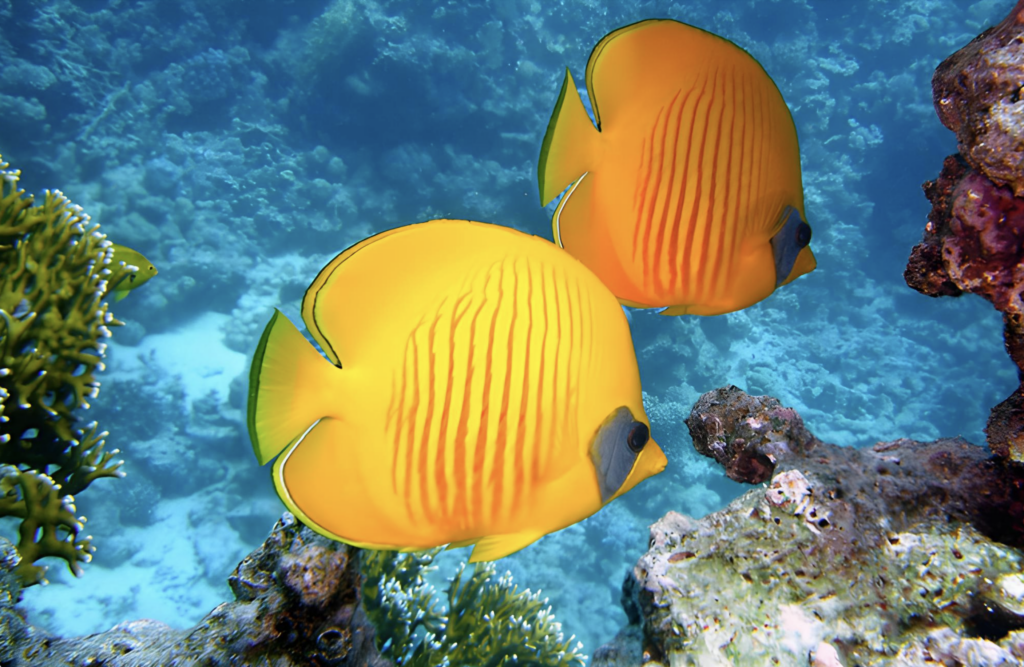
Around Mnemba Island, underwater coral nurseries maintained by trained local conservation rangers have helped restore live coral cover on the island’s damaged house reef from around 10% to about 80%. After the reef was declared a protected marine conservation zone in 2022, visitor numbers were capped, conservation fees increased from US$3 to US$25 per person, and daily boat traffic was reduced from as many as 200 boats to 80. Local fishermen have also reported a decline in destructive practices such as dynamite fishing. The Zanzibar Marine Department has since identified a further 14 reef sites for restoration.
Amour believes visitors should have the chance to take part in conservation projects, giving them the chance to leave a positive impact.
One example already exists around Mnemba Island, where guests begin with a briefing at the Oceans Without Borders Discovery Centre before helping assemble hexagonal reef stars fitted with nursery-grown coral fragments. Marine rangers then guide them by snorkelling, free-diving or scuba diving as the reef stars are placed at protected restoration sites within the Mnemba Island Marine Special Area.
For tour operators, this kind of work opens up new experiences to build into itineraries. Fisherman Tours & Travel is exploring ways for visitors to take part in tree-planting, says Amour. Those wanting deeper involvement already have options. Community-based marine programmes in Jambiani invite participants to monitor dolphin behaviour, carry out coral bleaching surveys, collect fisheries data, join community clean-up projects and help train local boat operators in ethical wildlife tourism.
Dolphins, in particular, are where Amour believes the industry still has work to do. “We need to understand these are wild animals in the ocean,” he said. “We have to treat them the way we are supposed to treat them.” He shares that operators should keep their distance from dolphins and let the animals choose whether to approach boats, rather than chasing them for closer encounters.
Some operators have already changed their practices, delaying departures until later in the morning to avoid the rush of boats that traditionally gather at first light. In Kizimkazi, others, including African Impact, combine dolphin conservation, marine research and community engagement as part of the visitor experience.
Amour believes the tourism industry’s role goes beyond bringing visitors to Zanzibar. It can connect travellers with the people whose knowledge, traditions and livelihoods help protect the island’s natural environment. When those experiences create income for local communities, conservation becomes something that benefits the people living alongside it as well as the visitors who come to experience it.
“Sometimes people ignore the values of a different culture,” Amour said. “Zanzibari people have a unique culture. If we put culture first, we will preserve the environment while also creating benefits for the community.”
Seaweed farming is one example. Along Zanzibar’s east coast, visitors can spend time with women seaweed farmers, learn how the crop is grown and harvested, help plant or harvest seaweed during low tide, and see how it is turned into soaps, skincare products and food. The tours create another source of income for women’s cooperatives while introducing visitors to an industry that supports families along the coast.
The experiences are already there. Essence of Africa gives Zanzibar the chance to put them in front of the international travel trade, turning conservation projects and community initiatives into bookable experiences that can generate long-term support for the people behind them.
Meet Ali in Zanzibar this October at Essence of Africa 2026.


