Buyers from Poland, Germany, Italy and the Netherlands explain what their customers expect, what influences bookings and where African tourism suppliers could win more business.
European travellers still have a strong appetite for Africa, but suppliers need to pay closer attention to what customers in individual markets want. Competitive pricing is essential for Polish incentive groups, while Italian travellers place considerable value on language support. In Germany, sustainability is important, although it may have little influence on the final booking decision.
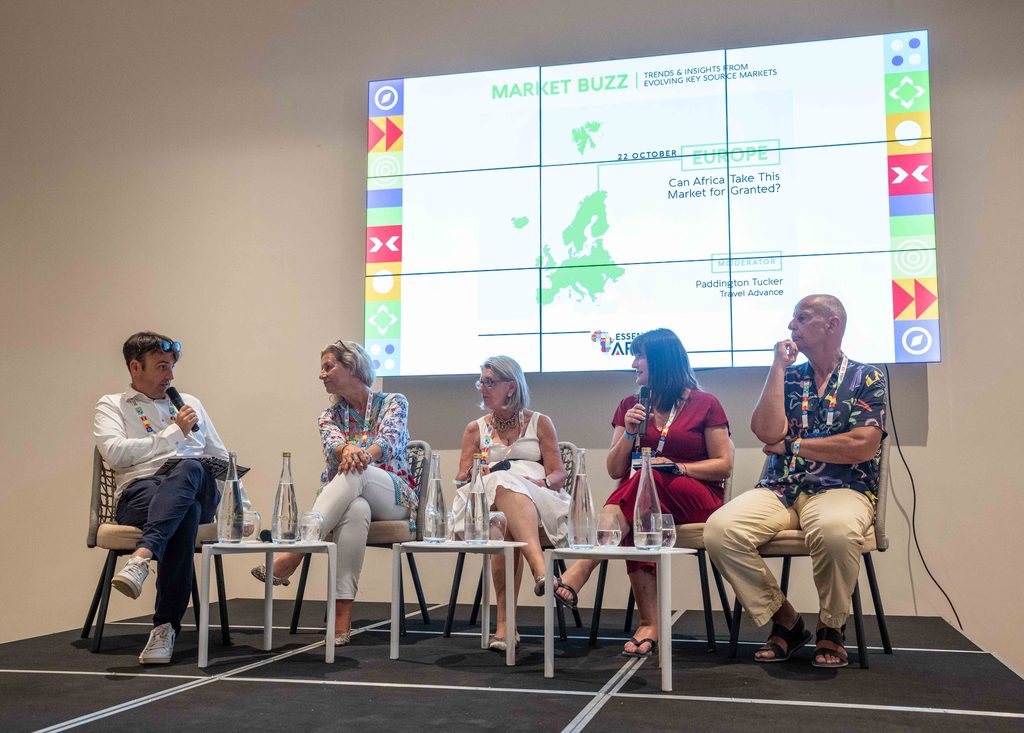
These differences were discussed during the Market Buzz: Europe session at Essence of Africa 2026, held at Diamonds Bijoux in Zanzibar on 21 October.
The session, moderated by Paddington Tucker, Founder and Managing Director of Travel Advance, examined whether Africa could afford to take its established European source markets for granted.
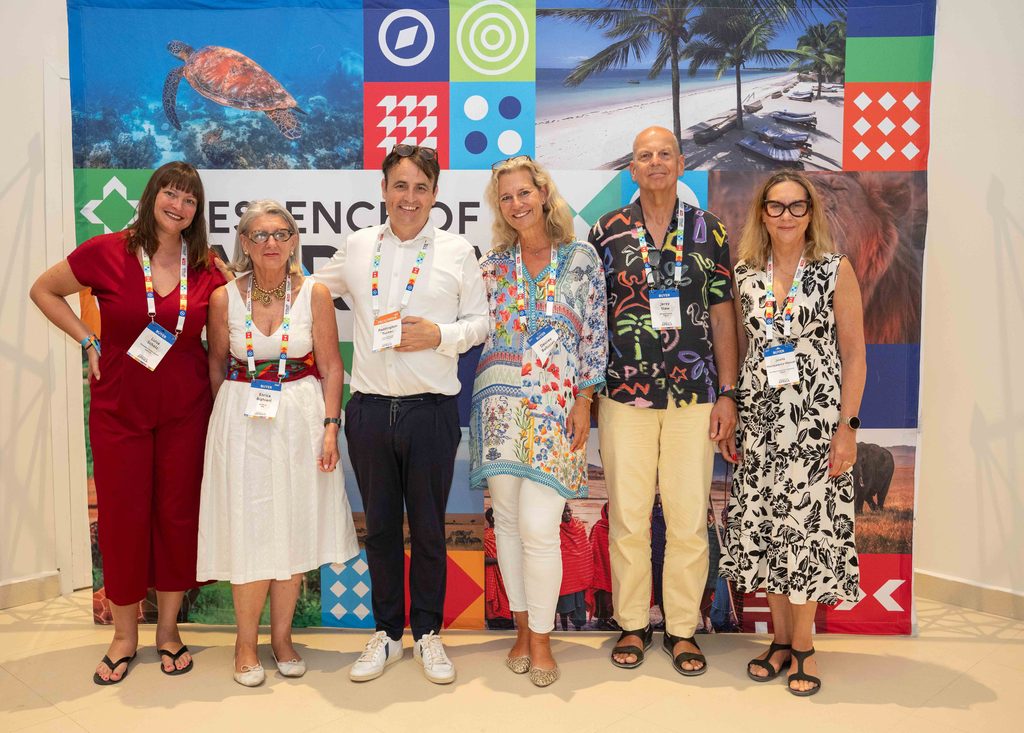
Joining him were Jerzy Slaw of New Poland Tour Operator, Désirée Baltussen, Owner of CAPEMOTION CC in the Netherlands, Luisa Scholz, Product Manager at Germany’s Chamäleon Reisen, and Maria Enrica Bighiani, Head of Tour Operator at Italy’s MOVE srl.
Poland’s incentive market grows sixfold
Poland’s incentive travel market has grown sixfold over the past decade, with expenditure expected to reach approximately US$400 million in 2026, according to Jerzy Slaw of New Poland Tour Operator. He estimated that Polish companies would send around 1,600 to 1,700 incentive groups abroad this year, creating opportunities for African destinations able to meet the requirements of corporate travellers.
New Poland’s business is divided roughly equally between incentive groups and high-end independent travel. Both segments favour wildlife and cultural experiences, often combined with a beach stay. Incentive groups, however, have additional requirements, including private venues and team-building activities.
Slaw said African destinations face stiff competition from Southeast Asia and South America. A single Polish corporate client might receive proposals from several incentive houses, each offering different international destinations. “The key notion is value for money,” he said. “Our clients have travelled quite a bit, and they always compare based on the experience they already had.”
Experienced travellers know what to expect from five-star accommodation and have a good understanding of what constitutes a fair price. Suppliers charging a premium need to demonstrate what customers will receive for their money.
Slaw encouraged African destination management companies (DMCs) to contribute ideas that could help overseas operators win business. “Be able to execute. Be a creative force of proposition, so help us with new ideas to win business for you, and we both benefit.”
New Poland prefers to work with one trusted DMC in each destination, developing the relationship over time. Slaw cautioned that a company experienced in arranging luxury trips for six people might not have the capacity to manage an incentive group of 200 or 300.
Dutch conference business extends beyond the event
Désirée Baltussen, Owner of CAPEMOTION CC, said African tourism businesses could benefit much more from international conferences if they understood the business opportunities surrounding the main event. Baltussen spent 16 years working in Africa after helping establish the Cape Town International Convention Centre. Her work focuses on attracting international association meetings to African destinations.
“Many people don’t realise what potential business a large international convention can bring. There’s a huge spin-off,” she said. Associations often arrange board meetings before conferences, while delegates and accompanying partners may extend their visits to explore the destination. Baltussen said attitudes towards these activities had changed. Previously, some associations discouraged leisure travel linked to conferences because members’ fees were intended for professional purposes. Increasingly, however, associations want their meetings to benefit host destinations. This creates opportunities for local businesses to provide excursions and experiences around an event.
She identified Cape Town, Kigali, Marrakech, Nairobi, Accra and Addis Ababa among Africa’s important convention destinations. Baltussen encouraged hotels and DMCs to work more closely with convention organisers, particularly when developing activities for delegates before and after an event. She said international associations also value opportunities for delegates to exchange knowledge with local professionals and want their conferences to leave a positive legacy.
German travellers value sustainability, but price still decides
Luisa Scholz, Product Manager at German small-group operator Chamäleon Reisen, challenged the idea that German customers choose their holidays primarily on sustainability credentials. She said almost 70% of German travellers consider sustainability important, but that does not mean they will automatically choose the most environmentally responsible option. “The deciding factor is still our destination, of course, experience and, most important, price,” she said.
Chamäleon, which celebrates its 30th anniversary this year, counts Africa among its most important regions. Namibia, South Africa and Tanzania together account for more than a third of its bookings. The operator contributes 1% of its annual profit to a foundation supporting approximately 50 social projects worldwide.
Scholz said customers appreciate opportunities to visit projects supported by the foundation during their holidays. In Tanzania, for example, the company supports More Than a Drop in Moshi. Chamäleon also uses local German-speaking guides. Scholz explained that this creates employment in the destination while helping older German customers who may not feel comfortable communicating in English.
Her advice to African suppliers was especially practical: be punctual. “Germans hate people being late or waiting for people,” she said. Travellers who have paid for a game drive expect their guide to arrive on time. Delays can cause considerable frustration, particularly among customers who want to make the most of every activity included in their itinerary.
Italian travellers want comfort and language support
Maria Enrica Bighiani, Head of Tour Operator at MOVE srl, said Italian travellers were showing increasing interest in tailor-made African holidays. Bighiani has worked in tourism for 40 years, including 20 years selling Africa. She said some Italian operators were moving away from traditional charter programmes towards more personalised itineraries.
Travellers aged approximately 45 to 60 represent an attractive market. Many have money to spend but limited holiday time, and they want to enjoy Africa’s experiences without compromising on comfort.
Language is particularly important. Some Italian travellers speak little English, while others struggle to follow explanations given by English-speaking guides. Bighiani said Italian-speaking guides and staff could make the experience considerably more comfortable. “It’s a must. Language is the must,” she said.
Italy’s traditional August holiday period and Christmas season remain important, but honeymoon travel is generating demand in other months. Bighiani said honeymooners are no longer necessarily couples in their twenties. Increasingly, they include people in their forties and fifties taking second honeymoons. These travellers are helping generate bookings during April and May, as well as September through November. She also sees potential for Italian operators to develop more itineraries featuring Uganda’s gorillas and southern Madagascar.
For operators selling bespoke travel, she emphasised the importance of providing comfortable experiences within the limited time many Italian customers have available.
Other insights for the African travel trade
The discussion also brought out several observations:
- The Dutch are keen to explore beyond established routes. Baltussen described Dutch travellers as adventurous and interested in discovering less-visited parts of Africa. She noted growing relationships between Dutch travel businesses and DMCs in South Africa’s Eastern Cape.
- Polish travellers are increasingly confident about international travel. Slaw described Poland as a growing economy with an optimistic outlook, in contrast to concerns about slower growth in parts of Western Europe. New Poland is looking to expand its business as demand increases.
- German-speaking guides are especially useful for older travellers. Scholz noted that some older customers, particularly from eastern Germany, have limited English proficiency. Operators employing local guides who speak German can make their tours more accessible to this market.
- African beach destinations can help win Polish incentive groups. Slaw said corporate clients often want to finish a programme with time to relax on the coast. This gives operators an opportunity to combine inland itineraries with beach stays.
- International associations are interested in professional exchange. Baltussen said medical and scientific conferences, for example, create opportunities for visiting delegates to engage with African professionals working in the same fields. This can influence an association’s choice of host destination.