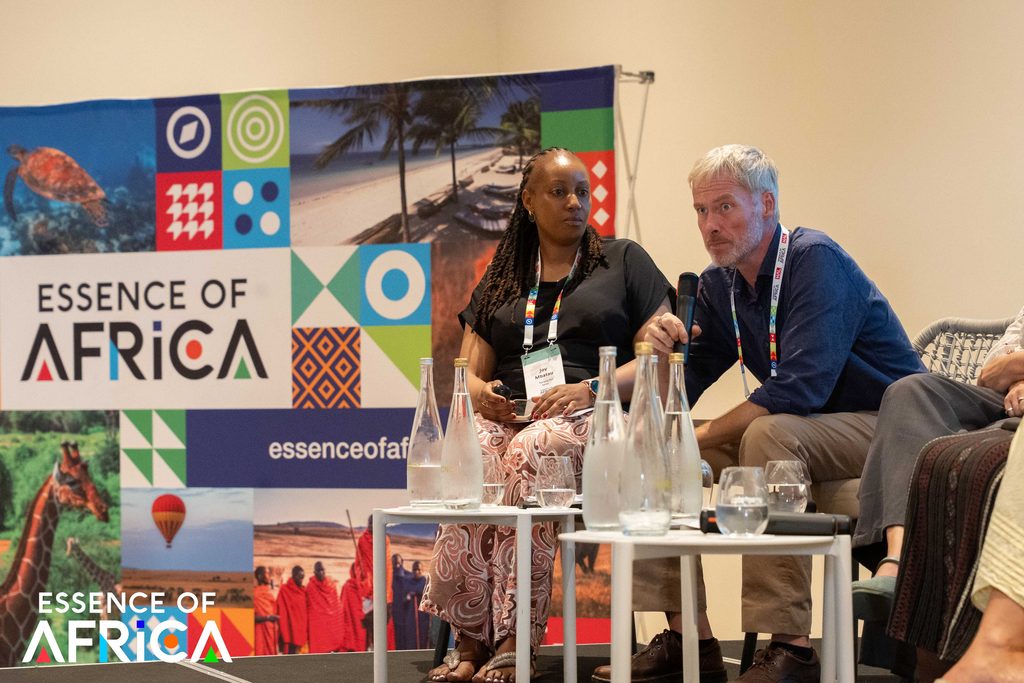
At Essence of Africa 2026, Chumbe Island Coral Park shared how a small ecolodge has helped fund marine conservation for more than 30 years, with benefits that local fishing communities can now see for themselves.
When Chumbe Island Coral Park first began protecting its coral reefs in the early 1990s, local fishermen weren’t happy. Fishing was their livelihood, and being told they could no longer fish in a particular area was difficult to accept. More than three decades later, some of those same fishing communities are asking whether the protected area can be extended.
For Richard Linney, General Manager of Chumbe Island Coral Park, this change in attitude is among the most encouraging results of the island’s conservation work. Speaking at Essence of Africa 2026, he explained that fishermen had initially been presented with scientific evidence showing how marine protection could help fish populations recover. But they needed to experience the benefits themselves.
“We are actually now getting those same communities and fishermen coming up to us and saying, ‘So when are you going to extend the area of protection?'” he told delegates. The fishermen had seen improvements in their catches around the protected area, he said. The results had taken decades, but the communities now had their own evidence of the benefits.
Linney was speaking during Beyond the Baseline: Zanzibar’s Positive Impact Pioneers, moderated by Joy Mbatau, Regional Hub Manager for East Africa at The Long Run, and sponsored by ResRequest.
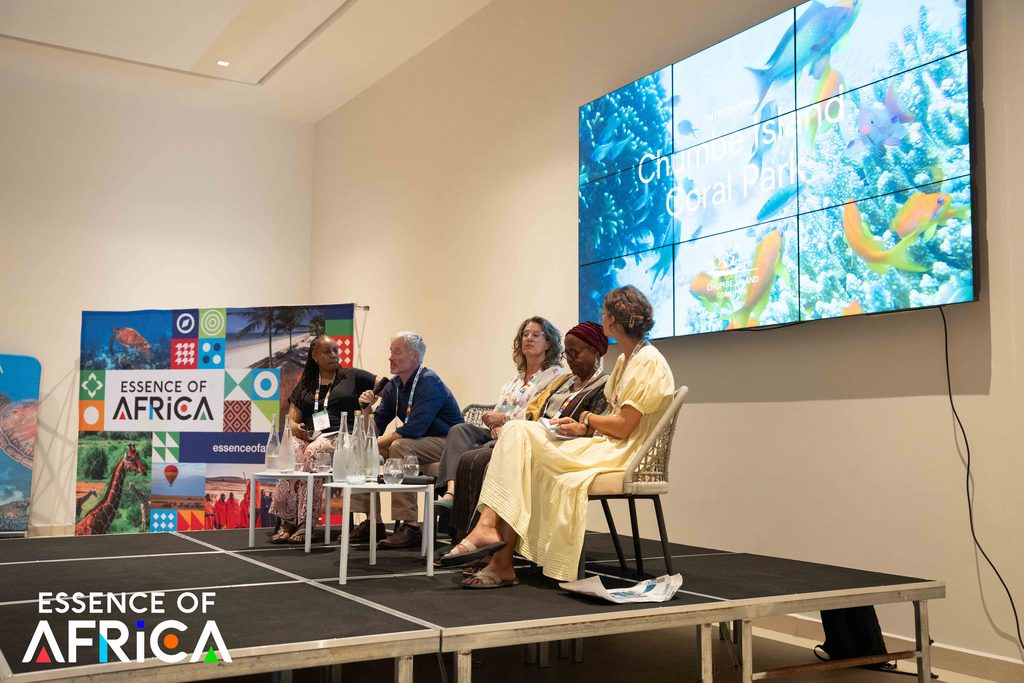
Seven bungalows help protect an island
Chumbe Island Coral Park was established in the early 1990s, when destructive fishing and overexploitation were placing growing pressure on Zanzibar’s marine environment. At the time, Tanzania had yet to establish marine protected areas to address these problems, Linney explained. Chumbe was developed through a public-private partnership with the Zanzibar government, with a not-for-profit organisation taking responsibility for financing and managing the marine protected area.
The conservation work would be funded through tourism, using revenue generated by a small ecolodge on the island. Linney described Chumbe as the world’s first privately funded marine protected area and an early example of a protected area financed through its own tourism operations.
The lodge has just seven bungalows, with a maximum daily capacity of 18 guests. Most of the island is protected forest, with development restricted to approximately 2.5 hectares. These limits are deliberate. Fewer visitors reduce pressure on the forest and on the reef, which is one of the island’s main attractions for snorkelling. The small capacity can make availability difficult, Linney acknowledged, but increasing visitor numbers would undermine the conservation approach.
For tourism businesses, Chumbe offers an example of how accommodation revenue can finance the protection of the natural environment that attracts visitors in the first place.
Introducing Zanzibar’s children to their reefs
Environmental education has been part of Chumbe’s work since its early years. Linney said more than 13,000 schoolchildren had participated in the island’s education programme over approximately three decades. For many, it was their first opportunity to see a coral reef, despite growing up in Zanzibar. The visits introduce children to the marine environment and explain why healthy reefs are important to the island’s future. Linney believes reaching young people is one of the most effective ways to build lasting support for conservation. Children take what they learn home, sometimes questioning their parents’ behaviour when they see practices that could damage the environment. The programme also helps young Zanzibaris experience an important part of their natural heritage that they might otherwise never visit.
The challenge of proving conservation works
Asked how Chumbe communicates its environmental impact to visitors, Linney said guests often understand the experience once they have spent time on the island. He recalled how the island’s conservation manager describes the moment when visitors begin to notice something different. It may happen at the end of the day, after their activities are finished and the sun is beginning to set.
Chumbe can provide facts and figures about its conservation work, but he believes experiencing the island gives visitors an understanding that numbers alone cannot convey. The changing attitudes of local fishermen offer a similar lesson. Conservation data was available when the marine protected area was established, but the communities needed time to see what protection meant for their livelihoods.
Linney also acknowledged that measuring and communicating environmental impact takes resources. For businesses managing daily operations, monitoring can easily slip down the list of priorities. Once a system is established, however, measurement becomes easier to maintain. His advice was to make the time for it and treat the work as part of running the business.
Small actions count too
During the audience discussion, Linney was asked to suggest one action delegates could take immediately. His answer was to pick up litter. At Chumbe, staff regularly collect rubbish that washes onto the island’s beaches, even though it comes from elsewhere. Linney said the same habit could be adopted by anyone. Picking up one or two pieces of rubbish each day takes little effort, but the amount adds up over time.
He encouraged delegates to pass the habit on to others, just as Chumbe encourages its staff to take responsibility for the environment around them. For hotels and tour operators, the island’s experience also offers an opportunity to discuss conservation with guests through what they can see and experience during their stay.
Chumbe’s work with fishing communities is a particularly good example. Protecting the reef initially meant asking people to give up access to a fishing area. Today, some are asking for that protection to cover more of the surrounding sea.
For more information about Chumbe Island Coral Park, its ecolodge and conservation programmes, visit www.chumbeisland.com